
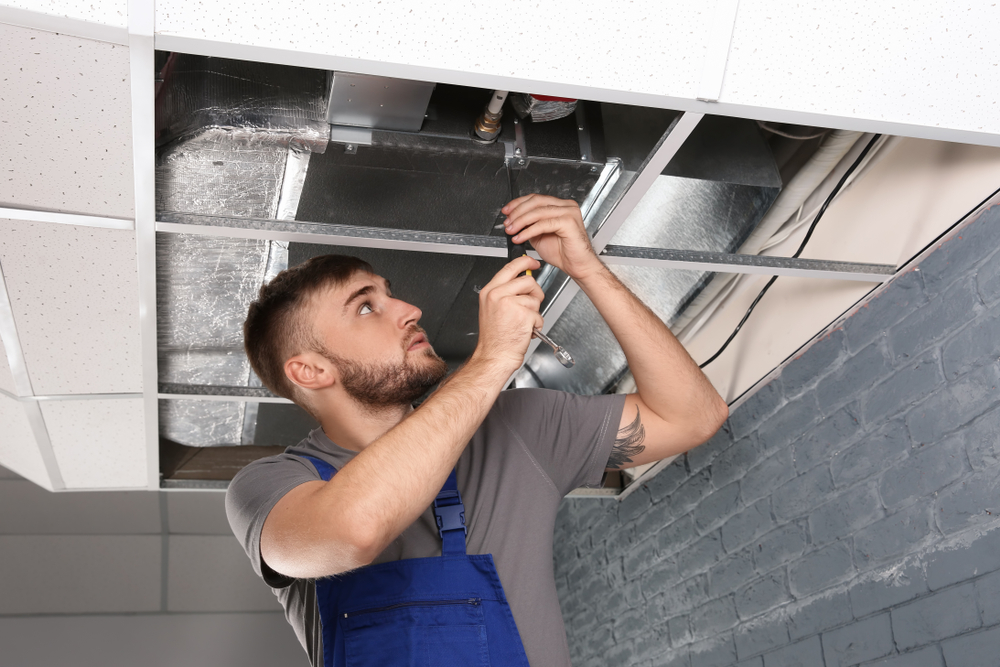
A restaurant that suddenly feels smoky, a retail space with stubborn odors, or an entry door that is unusually hard to open may all point to the same general problem: the building is not moving air correctly. In St. Louis Park, commercial ventilation problems can become especially noticeable during Minnesota’s heating season, when exhaust, makeup air, and HVAC systems all need to work together.
Quick answer: Restaurant and retail ventilation problems generally come from one of three areas: exhaust equipment that is not removing enough air, makeup air equipment that is not replacing exhausted air properly, or ductwork that is restricting or misdirecting airflow. Because these systems interact, the symptom does not always reveal the source. A commercial HVAC technician can evaluate airflow, equipment operation, controls, and duct conditions to determine where the imbalance begins.
What local businesses should know
-
An exhaust fan problem can reduce odor, heat, moisture, or contaminant removal even when the fan still appears to be running.
-
During cold St. Louis Park winters, makeup air performance matters because large quantities of outdoor air may need to be introduced and heated.
-
Restaurants often have more complicated ventilation demands than typical retail spaces because kitchen exhaust can remove substantial amounts of indoor air.
-
Negative building pressure can affect doors, drafts, comfort, and HVAC operation, so the exhaust fan is not always the only equipment that needs attention.
-
Commercial spaces around St. Louis Park can have very different ventilation configurations depending on building age, tenant improvements, equipment, and how the space is used.
Why Do Commercial Ventilation Problems Matter in St. Louis Park?
Commercial ventilation problems matter in St. Louis Park because Minnesota’s large seasonal temperature swings can make an airflow imbalance uncomfortable, inefficient, and disruptive to daily operations. A system that seems acceptable during mild weather may behave very differently when outdoor temperatures drop and heating equipment must condition incoming makeup air.
Local commercial properties range from restaurants and shops near the West End and Excelsior Boulevard to businesses along Highway 100 and the I-394 corridor. Different building layouts and tenant uses create different airflow requirements.
Air Climate Control Inc works with commercial HVAC and ventilation concerns in the area. When we investigate an airflow complaint, the goal is to identify the underlying cause instead of assuming that the most noticeable piece of equipment is automatically responsible.
What Do We Commonly Observe With Local Commercial Ventilation Systems?
Our field observation is that commercial ventilation complaints often involve multiple connected components rather than one obvious failed part. Exhaust fans, makeup air equipment, dampers, controls, filters, ductwork, heating equipment, and the building envelope can all affect how air moves through a restaurant or retail space.
Minnesota weather adds another variable. During winter, outdoor air entering a building is much colder than the conditioned indoor air. During warm, humid periods, bringing outdoor air inside creates a different conditioning demand. Those seasonal changes can expose weaknesses that were less noticeable under moderate conditions.
How Can Poor Ventilation Affect a Restaurant or Retail Business?
Poor commercial ventilation can affect comfort, odor control, equipment performance, energy use, and normal business operations. In a St. Louis Park restaurant, insufficient exhaust may allow heat or cooking odors to linger, while inadequate makeup air can leave the building under excessive negative pressure.
Retail properties can experience their own problems. Customers may notice drafts near entrances, uneven temperatures, stale odors, or uncomfortable areas within the store.
Pressure problems can also affect adjoining spaces in multi-tenant buildings. That makes proper diagnosis especially important in shopping centers and other commercial properties where several tenants share walls, roof areas, or portions of a mechanical system.
What Are the Warning Signs of a Commercial Ventilation Problem?
Common ventilation warning signs include lingering odors, unusual drafts, difficult doors, excessive heat, weak exhaust, and comfort problems that change when ventilation equipment operates. These symptoms do not identify the failed component by themselves, but they provide useful clues.
Watch for:
-
Cooking odors or smoke that do not clear as expected.
-
Entry or interior doors that become unusually difficult to open or close.
-
Strong drafts around doors, windows, or other openings.
-
A kitchen or work area that remains excessively hot.
-
Exhaust fans that sound different, vibrate, or appear to move less air.
-
Makeup air that feels excessively cold during winter operation.
-
Temperature problems that become worse when kitchen or exhaust equipment starts.
-
Odors moving into neighboring tenant spaces.
When Should a St. Louis Park Business Call a Commercial HVAC Professional?
A St. Louis Park business should call a professional when ventilation problems persist, affect normal operations, involve gas-fired or electrical equipment, or suggest that exhaust and makeup air are out of balance. Staff can safely note when symptoms occur and check accessible filters according to equipment instructions, but mechanical diagnosis should be left to qualified service personnel.
Avoid adjusting unfamiliar dampers, bypassing controls, modifying ductwork, or attempting electrical and combustion-related repairs. Commercial ventilation systems are interconnected, so changing one component can affect airflow somewhere else.
What Commonly Causes Restaurant and Retail Ventilation Problems?
The most common causes include exhaust fan problems, inadequate makeup air, restricted airflow, control failures, and duct or damper issues. Determining which one is responsible requires looking at the ventilation system as a whole.
1. Exhaust fan problems: A fan may run without delivering the intended airflow. Belt, motor, wheel, electrical, control, or other mechanical issues can affect performance depending on the equipment design.
2. Makeup air problems: If replacement air is not supplied correctly, the building may become negatively pressurized. In a Minnesota winter, problems with heating the incoming air can also create severe comfort complaints.
3. Restricted filters or airflow paths: Dirty filters and other restrictions can reduce airflow through equipment.
4. Duct and damper problems: Closed, damaged, obstructed, or incorrectly positioned components can change airflow even when fans are operational.
5. Controls and operating sequences: Exhaust and makeup air equipment may need to operate together. A control problem can leave one part of the system running without the other.
How Can Local Businesses Prevent Ventilation Problems?
Preventive ventilation maintenance should focus on keeping airflow paths clear, checking equipment operation, and finding developing problems before peak heating or cooling conditions. For St. Louis Park businesses, fall is a particularly useful time to pay attention to equipment that must introduce and heat outdoor makeup air during winter.
Managers can monitor filters, unusual noises, odors, drafts, and changes in door operation. Restaurant staff can also note whether a ventilation complaint happens continuously or only when particular exhaust equipment is operating.
Professional maintenance can go further by evaluating mechanical components, controls, heating operation, and airflow-related concerns that cannot be diagnosed through a visual check alone.
What Results Can You Expect After a Ventilation Problem Is Corrected?
Correcting the actual ventilation problem should restore more appropriate airflow and reduce the symptoms caused by the malfunction or imbalance. Depending on the original issue, that may mean better odor removal, fewer drafts, more manageable indoor temperatures, improved door operation, or more consistent interaction between exhaust and makeup air equipment.
Results depend on the building, system design, equipment condition, and cause of the problem. An equipment repair cannot correct every possible design or building-pressure issue, which is why accurate diagnosis comes first.
What Mistakes Should Commercial Property Managers Avoid?
The biggest mistake is treating every airflow complaint as an exhaust fan failure without checking the rest of the ventilation system. That can lead to replacing or repairing a component without correcting the underlying issue.
Mistake: Increasing exhaust without considering replacement air.
Consequence: Building pressure and comfort problems may become worse.
Better approach: Evaluate exhaust and makeup airflow together.
Mistake: Ignoring a ventilation problem until Minnesota winter is well underway.
Consequence: Cold-air and heating-related symptoms can become more disruptive.
Better approach: Investigate recurring problems before severe weather arrives.
Mistake: Assuming a running fan is a properly performing fan.
Consequence: Reduced airflow may go unnoticed.
Better approach: Have system performance evaluated when symptoms persist.
What Is a Common Local Ventilation Scenario?
A common local scenario is a restaurant where the kitchen exhaust appears to operate, but employees notice drafts and difficult exterior doors whenever the kitchen ventilation is running. This pattern can point toward a building-pressure or makeup-air issue rather than simply an exhaust fan that needs more capacity.
This is an illustrative St. Louis Park-area scenario, not a specific customer case study. Proper diagnosis would require checking the actual equipment, controls, airflow, and building conditions.
Which Services Can Address Commercial Ventilation Problems?
Commercial HVAC and ventilation service can address problems involving exhaust equipment, makeup air systems, controls, heating components, and related airflow concerns. The right service depends on whether testing identifies a maintenance problem, failed component, control issue, duct restriction, or a broader system concern.
For local restaurants and retailers, we can evaluate the symptoms and determine what part of the system requires attention rather than relying on guesswork.
Should You Troubleshoot the Problem Yourself or Schedule Service?
Business staff can monitor basic symptoms and accessible maintenance items, but persistent ventilation and building-pressure problems generally require professional diagnosis. Recording when a problem occurs can be especially helpful because it may reveal a connection between the symptom and particular equipment.
A filter check or observation of a fan is different from modifying commercial ventilation equipment. If troubleshooting involves electrical components, motors, gas-fired makeup air equipment, controls, rooftop equipment, or duct modifications, professional service is the appropriate next step.
What Areas Around St. Louis Park Can Experience These Issues?
Commercial ventilation issues can occur throughout St. Louis Park and surrounding Hennepin County communities because restaurants and retail buildings use many different HVAC and exhaust configurations. Nearby commercial areas in Golden Valley, Hopkins, Edina, and Minneapolis can face similar seasonal airflow and makeup-air challenges.
The specific solution should always be based on the individual building and equipment rather than location alone.
What Can Happen If a Ventilation Problem Is Ignored?
Ignoring a ventilation problem can allow comfort, odor, airflow, and equipment issues to continue and potentially interfere with normal business operations. A minor symptom may also be an early indication of a mechanical or control problem that becomes more disruptive later.
For St. Louis Park restaurants, waiting until the coldest part of the heating season can make a makeup-air problem particularly noticeable. Addressing recurring symptoms earlier gives a technician an opportunity to identify what is actually causing them.
Frequently Asked Questions About Commercial Ventilation
How do I know whether my restaurant has an exhaust or makeup air problem?
The symptom alone usually cannot confirm whether the exhaust or makeup air system is responsible. Weak odor removal can suggest an exhaust issue, while strong negative pressure and difficult doors can suggest insufficient replacement air. Because the systems work together, professional airflow and equipment evaluation provides a clearer diagnosis.
Why is my St. Louis Park restaurant door hard to open when the hood is running?
A door that becomes harder to open when kitchen exhaust operates can indicate negative building pressure. The exhaust system removes indoor air, and adequate replacement air must enter the building. If the makeup air system or another airflow path is not functioning as intended, the pressure difference can become noticeable at exterior doors.
Can makeup air cause a restaurant to feel cold in winter?
Yes, a makeup air problem can contribute to cold conditions when outdoor air is not being introduced or heated as intended. This can be especially noticeable during a St. Louis Park winter. The cause may involve heating equipment, controls, airflow, or other system components, so diagnosis should focus on the complete makeup air system.
Does a running exhaust fan mean it is working correctly?
No, a running exhaust fan does not automatically mean it is producing the required airflow. Mechanical wear, airflow restrictions, fan components, controls, or duct conditions can affect performance. If odors, heat, or smoke removal has changed, the system may need evaluation even if employees can hear the fan operating.
Why do ventilation problems sometimes get worse during Minnesota winter?
Winter can expose ventilation problems because commercial buildings must balance exhaust with very cold incoming outdoor air while maintaining indoor comfort. Makeup air heating and airflow become especially important during low temperatures. A problem that was less obvious during mild fall weather may become noticeable once the St. Louis Park heating season intensifies.
Can ductwork cause the same symptoms as a bad exhaust fan?
Yes, duct and damper problems can produce symptoms that resemble fan problems because both can reduce or alter airflow. A technician may need to inspect multiple parts of the system before identifying the cause. Replacing a fan without evaluating the airflow path may not resolve a restriction elsewhere.
Should a retail business in Hennepin County worry about negative building pressure?
Yes, excessive negative pressure can affect retail properties as well as restaurants. Possible symptoms include drafts, difficult exterior doors, comfort problems, and air being pulled through unintended openings. The appropriate correction depends on the building’s ventilation equipment, HVAC configuration, tenant layout, and source of the pressure imbalance.
How often should commercial ventilation equipment be checked?
The appropriate maintenance schedule depends on the equipment, operating hours, environment, manufacturer guidance, and how heavily the ventilation system is used. High-use restaurant equipment may require more frequent attention than some retail applications. Businesses should follow applicable equipment requirements and address noticeable airflow, noise, odor, or comfort changes promptly.
Keep Your St. Louis Park Business Comfortable and Properly Ventilated
Commercial ventilation works best when exhaust, makeup air, ductwork, controls, and HVAC equipment operate as a coordinated system. For restaurants and retailers in St. Louis Park, understanding that relationship can make it easier to recognize problems early and avoid guessing at the repair.
Get to the Source of Your Commercial Ventilation Problem
Whether the issue points to exhaust, makeup air, controls, or ductwork, we can help determine what is affecting your building’s airflow and identify appropriate service options.