
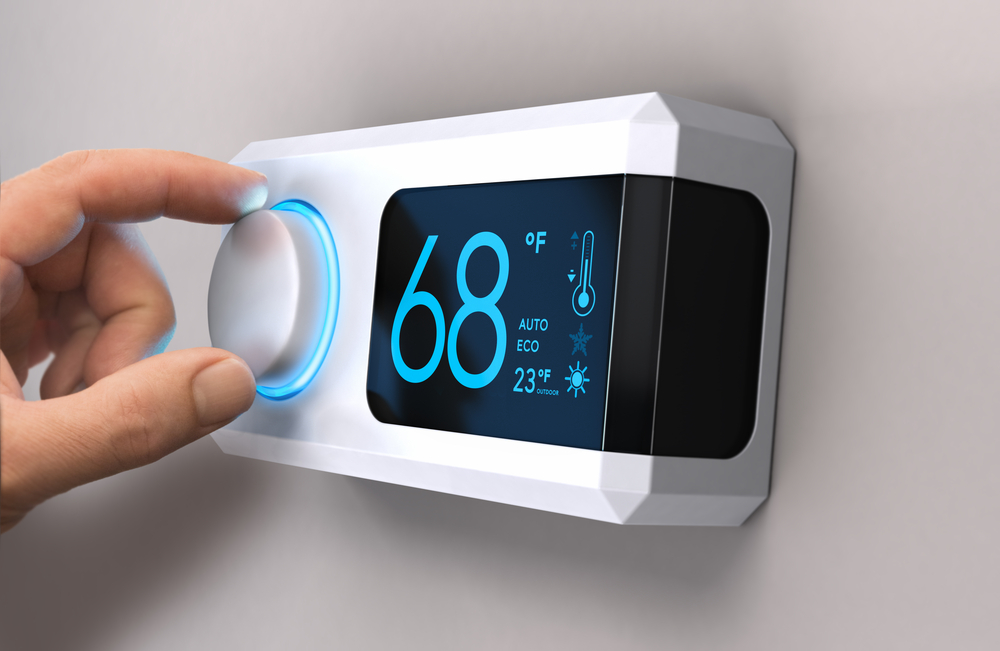
Commercial buildings account for a significant portion of global energy consumption, and for many business owners and facility managers, energy costs represent one of the largest recurring operational expenses. As utility rates continue to climb and sustainability expectations from tenants, investors, and regulators grow stronger, the pressure to find smarter solutions has never been greater. Smart thermostats for commercial buildings have emerged as one of the most practical and cost-effective tools available for tackling this challenge head-on.
Unlike traditional thermostats that simply respond to manual adjustments, smart thermostats use sensors, algorithms, and connectivity to make intelligent decisions about heating and cooling in real time. They learn occupancy patterns, adjust to weather forecasts, and allow facility managers to control entire building systems from a single interface. The result is a more responsive, efficient, and adaptable climate control system that aligns energy use with actual building needs rather than rigid, preset schedules.
The commercial sector has been slower than residential markets to adopt smart HVAC controls, but that gap is closing fast. Businesses of all sizes are recognizing that modernizing their climate control systems is not just an environmental choice; it is a financially strategic one.
How Smart Thermostats Reduce Commercial Energy Costs
One of the most compelling reasons to invest in smart thermostats for commercial buildings is their proven ability to reduce commercial energy costs. Heating, ventilation, and air conditioning systems typically account for 40 to 60 percent of a commercial building’s total energy usage. Even modest improvements in HVAC efficiency can translate into thousands of dollars in annual savings.
Smart thermostats achieve these savings through several interconnected mechanisms. Occupancy detection is one of the most powerful. Using motion sensors or integration with building access systems, smart thermostats can detect when areas of a building are occupied or vacant and adjust temperatures accordingly. Conference rooms that sit empty for hours, office wings that are unoccupied on weekends, and lobbies with variable foot traffic no longer need to be heated or cooled at full capacity around the clock.
Demand-based scheduling is another key feature. Commercial buildings often operate on predictable routines, and smart thermostats can be programmed to pre-condition spaces before occupants arrive and scale back when they leave. This eliminates the energy waste associated with running HVAC systems at full tilt during off-hours, which is one of the most common sources of unnecessary expense in commercial properties.
Some smart thermostat systems also participate in utility demand response programs, automatically reducing energy consumption during peak grid periods in exchange for rate incentives. For high-consumption commercial buildings, this can generate meaningful credits or rebates that further offset operational costs.
Integration with Building Management Systems
For larger commercial properties, smart thermostats are most effective when they operate as part of a broader building management system (BMS). A BMS centralizes control over HVAC, lighting, security, and other building functions, and smart thermostats serve as critical data nodes within that network. They feed real-time temperature, humidity, and occupancy information into the BMS, which uses that data to optimize the entire facility’s performance.
This level of integration enables zone-based climate control, which is particularly valuable in multi-tenant buildings, large office complexes, or mixed-use developments. Different zones can maintain different temperature profiles based on their specific occupancy patterns, usage types, or tenant preferences. A server room requires consistent cooling regardless of business hours, while a retail showroom may only need moderate climate control during customer-facing hours. Smart thermostats make this granular level of control not only possible but easy to manage.
Cloud connectivity is another major advantage. Facility managers no longer need to be physically present to adjust settings, respond to HVAC issues, or review energy reports. Remote access through web dashboards or mobile applications allows for real-time oversight and quick adjustments from anywhere. Alerts and diagnostics can notify managers when systems are underperforming or when energy usage spikes unexpectedly, enabling faster response times and preventing minor issues from becoming costly repairs.
Data, Analytics, and Long-Term Planning
Beyond day-to-day control, smart thermostats for commercial buildings generate a continuous stream of data that has long-term strategic value. Energy consumption logs, temperature trends, occupancy patterns, and system performance metrics can all be analyzed to identify inefficiencies, benchmark performance against similar buildings, and inform capital planning decisions.
This data-driven approach transforms facility management from a reactive practice into a proactive one. Instead of waiting for an HVAC system to fail or energy bills to spike before taking action, managers can spot gradual performance degradation, identify equipment nearing the end of its useful life, and schedule maintenance during low-impact periods. Predictive maintenance capabilities, often built into advanced smart thermostat platforms, can extend the lifespan of HVAC equipment and reduce the frequency of expensive emergency service calls.
For businesses pursuing sustainability certifications such as LEED or ENERGY STAR, the detailed reporting generated by smart thermostats is extremely useful. Certification programs often require documented evidence of energy performance improvements, and smart thermostat data provides exactly the kind of granular, time-stamped records needed to satisfy those requirements. This makes smart thermostats not just an operational tool but a strategic asset in a building’s sustainability profile.
Analytics also support better lease negotiations and tenant communications. Landlords can demonstrate energy efficiency investments to prospective tenants and use documented savings data to justify premium lease rates in energy-efficient spaces. In competitive commercial real estate markets, this kind of transparent performance data can be a meaningful differentiator.
Choosing the Right Smart Thermostat System for Commercial Use
Not all smart thermostats are designed with commercial applications in mind. Residential models, while capable and affordable, typically lack the scalability, integration capabilities, and commercial-grade features that larger properties require. When evaluating smart thermostats for commercial buildings, facility managers should consider several important factors.
Compatibility with existing HVAC infrastructure is essential. Commercial buildings often use complex multi-stage heating and cooling systems, variable air volume (VAV) systems, or chiller-based setups that require thermostats specifically designed to communicate with those systems. Choosing a thermostat that is incompatible with existing equipment can result in costly retrofits or limited functionality.
Scalability matters as well. A solution that works for a single-tenant, 5,000-square-foot office may not be appropriate for a multi-building campus or a high-rise with dozens of zones. Look for platforms that offer centralized control of multiple units, hierarchical user permissions, and the ability to add devices as a portfolio grows.
Support and service agreements are also worth careful consideration. Commercial environments operate continuously, and HVAC failures can have immediate impacts on tenant satisfaction and productivity. Vendors that offer dedicated commercial support, guaranteed response times, and ongoing software updates provide an additional layer of protection that consumer-grade products rarely match.
Finally, consider the total cost of ownership rather than just the upfront price. Installation costs, subscription fees for cloud platforms, and integration expenses should all be factored into the financial analysis alongside projected energy savings and available utility rebates or tax incentives.
A Smart Investment for the Future of Commercial Real Estate
The case for smart thermostats in commercial buildings is both practical and forward-looking. Businesses that invest in these systems today position themselves to reduce commercial energy costs, improve tenant satisfaction, strengthen sustainability credentials, and gain the kind of operational visibility that modern facility management demands.
As energy regulations tighten and the commercial real estate market continues to reward efficiency-focused buildings, smart climate control will shift from a competitive advantage to a baseline expectation. Organizations that adopt these technologies now will be better equipped to meet those standards, control long-term costs, and deliver the comfortable, responsive environments that tenants and employees increasingly expect. In a sector where margins matter and operational resilience is essential, smart thermostats represent one of the most straightforward upgrades a commercial building can make.
Need a HVAC Contractor in Minneapolis, MN?
Locally owned and operated since 1991, Air Climate Control Inc specializes in commercial service and repair of air conditioning, heating, and refrigeration, serving Minneapolis and the surrounding areas with quality, prompt, and reliable work. Air Climate Control Inc strives to provide same-day service to ensure client comfort and satisfaction. We specialize in preventative maintenance plans as well as repair and can sub-contract for installation service. Our estimates are always FREE of charge. Call us TODAY for all of your commercial refrigeration, air conditioning, and heating needs!