
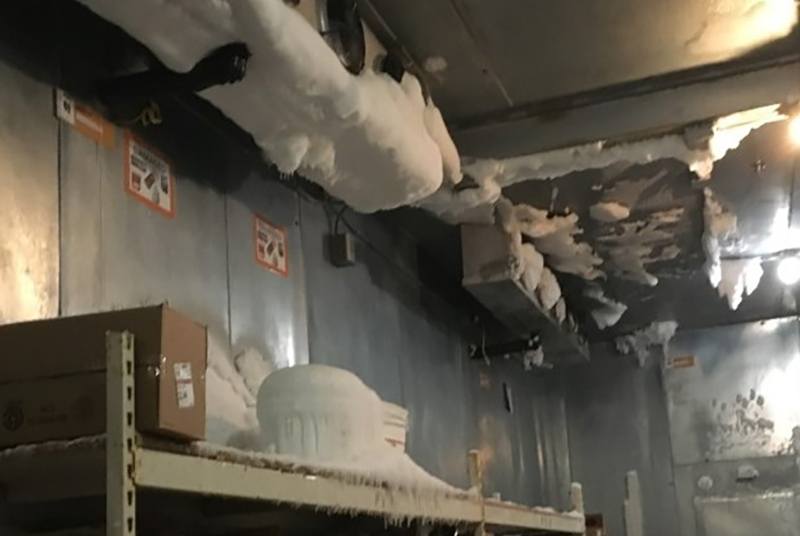
In commercial facilities, refrigeration systems are not just equipment. They are mission-critical assets. Whether you manage a restaurant, grocery store, food distribution warehouse, medical facility, or hospitality property, your commercial freezer plays a direct role in inventory protection, regulatory compliance, and daily operations. When ice buildup in commercial freezers starts to appear, it is more than a cosmetic issue. It can reduce efficiency, strain components, and lead to expensive downtime. At Air Climate Control Inc., we regularly work with building managers, maintenance directors, and commercial tenants who are dealing with walk-in freezer ice problems and need clear answers. Understanding the root causes of ice buildup is the first step toward protecting both your equipment and your bottom line.
Door Seal Failures and Air Infiltration
One of the most common causes of ice buildup in commercial freezers is uncontrolled air infiltration. Every time a freezer door opens, warm, humid air enters the space. That moisture condenses and freezes on evaporator coils, walls, ceilings, and product surfaces. While some frost is normal, excessive buildup typically points to an underlying issue.
Damaged or worn door gaskets are often the culprit. When seals no longer close tightly, outside air leaks in continuously, even when the door appears shut. Over time, that steady stream of humidity leads to significant frost accumulation. For walk-in freezer ice problems, this issue is especially common in high-traffic facilities such as restaurants and grocery stores where doors open frequently throughout the day.
Misaligned doors or warped frames can create similar problems. Even small gaps can allow enough moisture inside to trigger ongoing ice formation. Regular inspection of gaskets, hinges, and door alignment is critical for maintaining a stable freezer environment.
Malfunctioning Defrost Systems
Commercial freezers are designed with built-in defrost cycles to prevent excessive frost accumulation. When the defrost system fails or operates improperly, ice buildup in commercial freezers can escalate quickly.
Defrost heaters, timers, sensors, and control boards all play a role in maintaining balance. If a heater fails, frost will not melt as intended. If a timer malfunctions, the unit may not enter defrost mode at the correct intervals. In some cases, the system may defrost too infrequently or not at all.
For building managers overseeing multiple refrigeration units, walk-in freezer ice problems linked to defrost failures can be difficult to detect early. The first visible sign may be thick frost on evaporator coils or ice accumulating along interior panels. Left unchecked, this buildup restricts airflow, reduces cooling efficiency, and forces compressors to work harder.
A professional inspection can identify whether the issue lies with electrical components, sensors, or control settings. Addressing defrost malfunctions promptly prevents more serious mechanical strain.
Drain Line Blockages and Improper Drainage
When defrost cycles function properly, melted frost must drain away from the unit efficiently. If drain lines become clogged or frozen, water has nowhere to go. Instead, it refreezes inside the freezer, contributing to persistent ice buildup.
Walk-in freezer ice problems frequently originate from blocked drain pans or frozen drain tubes. Food debris, packaging materials, or sediment can accumulate in drainage pathways over time. In colder sections of the unit, partially drained water may refreeze before exiting completely.
For maintenance directors, drain line inspections are often overlooked during routine service checks. However, ensuring that defrost water flows freely is essential to maintaining a dry interior environment. If you notice pooling water that later turns to ice, it is a strong indicator of drainage trouble.
Proactive maintenance reduces the likelihood of these issues and prevents minor clogs from escalating into larger system failures.
Improper Temperature and Humidity Management
Maintaining consistent freezer temperatures is critical for preventing ice buildup. When temperature settings fluctuate or thermostats malfunction, excess moisture can accumulate inside the unit.
If a freezer operates slightly warmer than intended, moisture may not freeze immediately upon entry. Instead, it can linger and eventually solidify on cold surfaces, creating uneven frost patterns. Similarly, rapid temperature cycling caused by faulty sensors can contribute to excessive condensation.
High humidity environments also exacerbate the issue. Facilities located in humid climates or near kitchens with high steam output are particularly vulnerable. When walk-in freezer doors are opened in these conditions, moisture-laden air rushes in and freezes almost instantly.
For commercial tenants and property managers, evaluating both internal temperature stability and external environmental factors is essential. Proper insulation, vapor barriers, and climate control in adjacent spaces can help reduce moisture intrusion.
Airflow Restrictions and Evaporator Coil Issues
Adequate airflow is fundamental to efficient freezer operation. When airflow becomes restricted, cold air does not circulate evenly, leading to cold spots and ice formation.
Ice buildup in commercial freezers often begins on evaporator coils. As frost accumulates, airflow diminishes further, creating a cycle that compounds the problem. Fans may struggle to distribute air effectively, and temperatures can become inconsistent throughout the storage space.
Blocked vents, overstocked shelving, and improperly placed inventory can also interfere with circulation. In walk-in freezers, stacking products too close to evaporator units restricts air movement and encourages localized frost.
Mechanical issues such as failing evaporator fans or dirty coils further intensify ice formation. When coils cannot absorb heat efficiently, frost builds more rapidly. Routine coil cleaning and airflow assessments are essential components of preventative maintenance.
The Operational Impact of Ice Buildup
While frost may appear minor at first glance, the consequences of unchecked ice buildup can be significant. Excessive frost reduces energy efficiency, increases compressor workload, and elevates utility costs. In severe cases, it can damage fan motors, block sensors, and lead to complete system shutdowns.
For businesses reliant on temperature-sensitive inventory, downtime translates directly into financial loss. Food spoilage, pharmaceutical compromise, and regulatory violations are real risks associated with persistent walk-in freezer ice problems.
Beyond mechanical strain, safety concerns also arise. Ice accumulation on floors or door thresholds increases slip hazards for employees. Thick frost on door frames can prevent proper closure, compounding infiltration issues.
Addressing the root causes early protects both equipment longevity and operational continuity.
Preventative Maintenance as a Strategic Investment
The most effective way to manage ice buildup in commercial freezers is through proactive service and inspection. Scheduled maintenance allows technicians to evaluate door seals, defrost systems, drainage pathways, airflow components, and temperature controls before issues escalate.
Building managers and maintenance directors benefit from establishing a regular service schedule tailored to usage levels and environmental conditions. High-traffic facilities may require more frequent inspections, especially during peak seasons.
Professional diagnostics can identify subtle performance declines that are not immediately visible. By resolving minor inefficiencies early, you prevent the chain reaction that leads to severe ice accumulation.
Protecting Your Commercial Refrigeration System
Ice buildup is rarely a standalone issue. It is typically a symptom of air infiltration, mechanical failure, or environmental imbalance. Understanding these underlying causes empowers property managers and commercial tenants to take corrective action before equipment performance deteriorates.
At Air Climate Control Inc., we work closely with businesses experiencing walk-in freezer ice problems to identify precise causes and implement effective solutions. Our focus is not only on restoring functionality but on improving long-term system reliability.
Commercial refrigeration systems represent substantial investments. Protecting them requires attention to detail, timely maintenance, and expert support. When ice buildup in commercial freezers becomes noticeable, it is a signal to act, not to wait. By addressing infiltration, defrost cycles, drainage, temperature stability, and airflow, you can preserve efficiency, reduce repair costs, and maintain uninterrupted operations across your facility.