
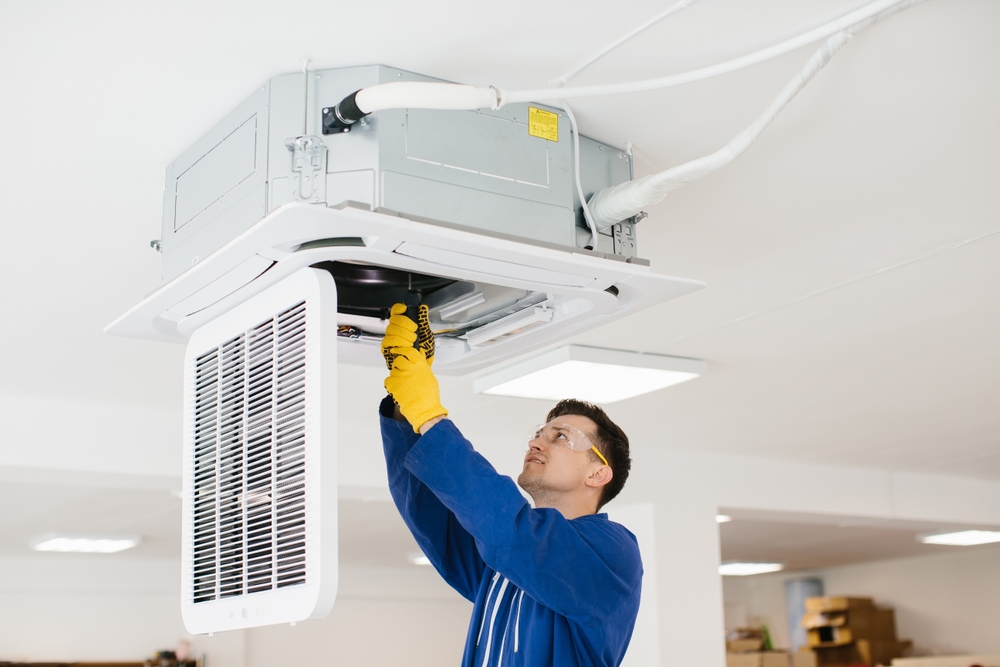
Ventilation is a critical component in maintaining healthy and productive environments within commercial buildings. Proper ventilation ensures that indoor air remains fresh, free of harmful contaminants, and conducive to human comfort and safety. As building codes, health standards, and employee well-being have gained greater attention, understanding HVAC ventilation requirements has become essential for building owners, facility managers, and engineers.
In commercial properties such as office buildings, retail centers, warehouses, schools, and healthcare facilities, air quality directly influences health outcomes, energy consumption, and compliance with legal regulations. Inadequate ventilation can lead to the accumulation of carbon dioxide, volatile organic compounds (VOCs), airborne pathogens, and particulate matter, resulting in reduced occupant comfort, poor cognitive function, and potential legal liabilities. Conversely, an optimized commercial ventilation system enhances indoor air quality (IAQ), controls humidity levels, and promotes energy efficiency.
The American Society of Heating, Refrigerating and Air-Conditioning Engineers (ASHRAE) sets widely recognized standards for indoor air quality, including ASHRAE Standard 62.1, which outlines minimum ventilation rates for commercial spaces. Complying with such standards not only fulfills regulatory expectations but also supports sustainable building certifications such as LEED or WELL. Understanding the intricacies of these standards is key to designing and maintaining effective HVAC systems for commercial buildings.
Key Ventilation Metrics and Standards to Follow
The foundation of HVAC ventilation requirements is built on a few key metrics that define the quantity and quality of air exchanged within a building. These include air changes per hour (ACH), ventilation rate per person, and ventilation rate per square foot. Each commercial space type has unique requirements depending on occupancy density, building use, and local climate conditions.
ASHRAE 62.1 outlines specific minimum ventilation rates for various commercial settings. For instance, office spaces typically require around 20 cubic feet per minute (cfm) per person, while classrooms may require closer to 15–20 cfm per person, in addition to per-square-foot airflow considerations. Restaurants, gyms, and healthcare facilities require significantly higher ventilation rates due to their increased contaminant generation and occupancy turnover.
Another important metric is the outdoor air fraction, which indicates the percentage of total supply air that is drawn from the outside. The higher this fraction, the greater the need for filtering and conditioning, especially in regions with extreme climates or poor outdoor air quality.
Ventilation systems must also consider CO2 thresholds, especially in high-occupancy environments. Keeping CO2 concentrations below 1000 parts per million (ppm) is generally considered acceptable, with best practices aiming for 600–800 ppm to ensure alertness and comfort.
In addition to ASHRAE, the International Mechanical Code (IMC) and local building codes provide supplementary guidance on commercial ventilation systems. These regulations ensure fire safety, odor control, and pollutant mitigation, and often mandate the inclusion of exhaust systems in restrooms, kitchens, and mechanical rooms.
Types of Commercial Ventilation Systems
To meet HVAC ventilation requirements effectively, building designers can choose from a variety of commercial ventilation systems. These systems fall into three broad categories: natural, mechanical, and hybrid.
Natural ventilation relies on openings such as windows, vents, and louvers to allow air to flow freely through a building. While this method can be energy-efficient and effective in certain climates, it lacks control and reliability, especially in larger or densely occupied commercial structures.
Mechanical ventilation systems, in contrast, use fans, ductwork, and air handling units (AHUs) to control the intake, distribution, and exhaust of air. This method provides a much higher degree of precision, making it the standard for most commercial applications. Common mechanical systems include constant air volume (CAV) and variable air volume (VAV) systems, energy recovery ventilators (ERVs), and demand-controlled ventilation (DCV).
Hybrid systems combine natural and mechanical ventilation techniques to leverage the strengths of both. For instance, operable windows may be supplemented by motorized fans that activate during peak occupancy periods or when outdoor conditions are unsuitable for passive ventilation.
The choice of system depends on factors such as building design, climate zone, occupancy patterns, energy goals, and budget. Each system must be carefully designed to balance air exchange, energy use, noise levels, and long-term maintenance needs.
Balancing Ventilation with Energy Efficiency
While meeting HVAC ventilation requirements is essential, excessive or poorly managed ventilation can lead to energy inefficiencies. Conditioning large volumes of outdoor air can significantly increase heating and cooling loads, especially in extreme weather conditions. Therefore, commercial ventilation systems must be designed with energy conservation in mind.
Energy recovery ventilation (ERV) and heat recovery ventilation (HRV) systems are two technologies that help mitigate energy losses by transferring heat and moisture between incoming and outgoing air streams. These systems are particularly effective in regions with significant temperature differentials between indoor and outdoor environments.
Demand-controlled ventilation is another energy-saving strategy. By using CO2 sensors and occupancy detectors, DCV systems adjust airflow in real time based on the actual number of occupants. This approach ensures that fresh air is delivered only when needed, reducing unnecessary energy expenditure during periods of low occupancy.
Another consideration is zoning. Segmenting a building into independently ventilated zones allows for more accurate control of airflow and temperature, especially in spaces with varying usage patterns throughout the day. For example, a conference room might require a higher ventilation rate during meetings but very little when unoccupied.
Proper maintenance is also crucial in preserving both air quality and energy efficiency. Clogged filters, malfunctioning dampers, and uncalibrated sensors can all lead to reduced system performance and increased energy consumption. Establishing routine inspection and maintenance schedules helps ensure optimal operation over the long term.
Legal Compliance and Health Implications
Failing to meet required ventilation standards can lead to both health consequences and legal ramifications. Poor indoor air quality is associated with a range of health issues, including respiratory irritation, allergic reactions, fatigue, and the transmission of airborne illnesses. In recent years, the COVID-19 pandemic has highlighted the importance of proper air exchange and filtration in limiting viral spread in enclosed spaces.
From a regulatory standpoint, employers and building operators are increasingly held accountable for maintaining safe indoor environments. Agencies such as OSHA may impose fines or penalties on businesses that neglect air quality, especially if employee complaints or illness clusters emerge. Moreover, building owners may face lawsuits or tenant disputes stemming from perceived negligence or substandard conditions.
Occupant satisfaction also plays a key role in business success. In office environments, for example, poor ventilation can result in decreased productivity, higher absenteeism, and increased turnover. Similarly, in retail or hospitality spaces, stale or unpleasant air can negatively impact customer experience and brand perception.
Many businesses are now integrating indoor air quality monitoring as part of their overall risk management strategy. By providing real-time data on air composition, humidity, and temperature, these systems not only support compliance but also reinforce transparency and trust among building occupants.
Conclusion
Ventilation is a foundational aspect of designing and operating commercial buildings that are safe, efficient, and compliant with modern standards. From adhering to ASHRAE guidelines and local building codes to choosing the right type of commercial ventilation system, there are many factors that contribute to meeting HVAC ventilation requirements. Balancing these needs with energy efficiency goals, legal obligations, and occupant well-being is essential for long-term building performance.
As awareness around indoor air quality continues to grow, investing in robust, adaptable, and intelligently managed ventilation solutions is no longer optional. It is a critical component of any successful commercial property strategy. Whether constructing a new facility or retrofitting an existing one, attention to ventilation requirements will deliver significant dividends in health, comfort, and operational excellence.
Need a HVAC Contractor in Minneapolis, MN?
Locally owned and operated since 1991, Air Climate Control Inc specializes in commercial service and repair of air conditioning, heating, and refrigeration, serving Minneapolis and the surrounding areas with quality, prompt, and reliable work. Air Climate Control Inc strives to provide same-day service to ensure client comfort and satisfaction. We specialize in preventative maintenance plans as well as repair and can sub-contract for installation service. Our estimates are always FREE of charge. Call us TODAY for all of your commercial refrigeration, air conditioning, and heating needs!